Why SEO Is Important for Website?
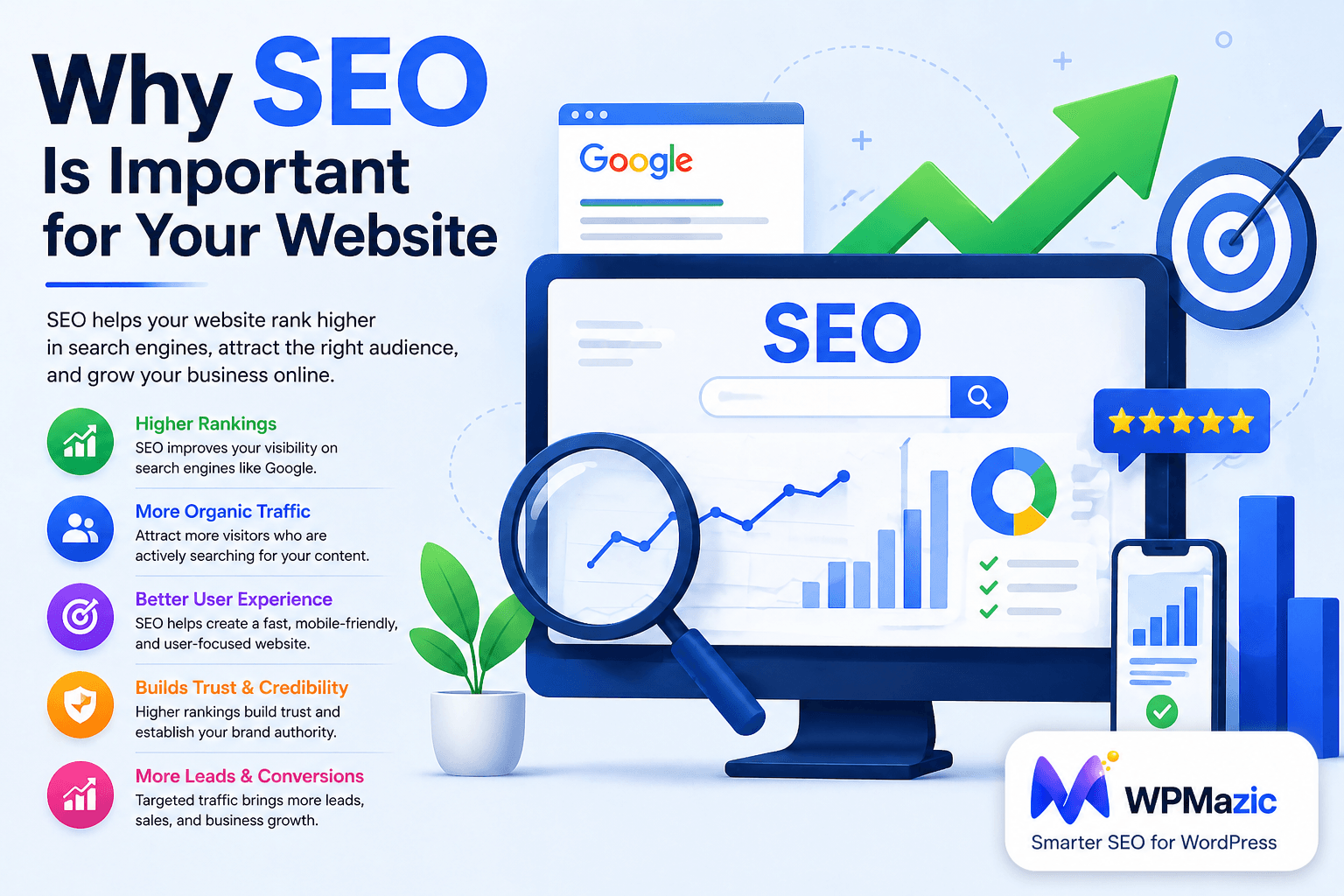
You built a beautiful website. You wrote compelling content. You launched with excitement. Then you waited. And waited. And… nothing happened.
No traffic. No leads. No sales. Just silence.
Sound familiar? If so, you're not alone. Millions of website owners make the same critical mistake: they focus entirely on building the website and forget about making it findable. And that's exactly where SEO — Search Engine Optimization — enters the picture.
Here's the uncomfortable truth: Google processes over 8.5 billion searches every single day. Your potential customers are out there, actively searching for exactly what you offer. The question isn't whether they're searching — it's whether they're finding you or your competitors.
In this comprehensive guide, we'll break down exactly why SEO is important for your website, how it works, and what you can do starting today to leverage it for real, measurable growth. Whether you're a complete beginner, a small business owner, or a developer launching your first client project — this guide is written for you.
By the end, you'll understand SEO not just as a technical checklist, but as the single most powerful long-term investment you can make in your online presence.
1. What Is SEO? (Plain English Explanation)
Before we talk about why SEO is important, let's make sure we're on the same page about what it actually is — without the jargon.
SEO stands for Search Engine Optimization. In the simplest terms, it's the practice of making changes to your website so that search engines like Google, Bing, and Yahoo are more likely to show your pages when people search for topics related to your business.
Think of it this way. Imagine Google as the world's largest librarian. There are over 1.9 billion websites in existence. When someone types a question into Google, the librarian needs to instantly find the most relevant, trustworthy, and helpful answer from that massive collection. SEO is how you signal to that librarian: "Hey, my page is the best answer to this question."
A Simple SEO Analogy
Imagine you own a pizza restaurant on a busy street. Without any signage, people walk right past you — they don't even know you exist. SEO is like putting up clear signs, getting listed in every local directory, having happy customers leave great reviews, and making sure your menu is visible from the street. It gets people walking through your door.
What SEO Is NOT
- It's not paying Google to show your website (that's Google Ads / PPC)
- It's not a one-time fix — it's an ongoing process
- It's not about tricking search engines with shady tactics
- It's not just about keywords stuffed into your content
- It's not guaranteed to show instant results overnight
💡 Quick Definition: SEO is the ongoing process of improving your website's content, structure, speed, and authority so that search engines rank it higher in unpaid (organic) search results — bringing you free, targeted traffic that converts.
2. Why SEO Is Important for Every Website
Here's a question worth sitting with: If your website doesn't show up on Google, does it really exist?
From a business perspective, the answer is practically no. Studies consistently show that over 90% of online experiences begin with a search engine, and the vast majority of users never scroll past the first page of results.
68%
of all online experiences begin with a search engine query.
(Source: BrightEdge Research)
of all online experiences begin with a search engine query.
(Source: BrightEdge Research)
That's not a minor statistic — it's a seismic one. If your competitors rank on page one and you're buried on page three, you're essentially invisible to the overwhelming majority of potential customers who are actively looking for what you sell.
The Real Cost of Ignoring SEO
Let's make this tangible. Say your target keyword gets 10,000 searches per month. The #1 result on Google typically gets about 27% of those clicks — that's 2,700 visitors per month. The #2 result gets around 15%, or 1,500 visitors. By the time you get to position #10, you're lucky to see 2–3% click-through — just 200 visitors.
Now imagine each visitor is worth £5 in revenue to your business. The difference between ranking #1 and ranking #10 is roughly £12,500 per month in potential revenue — for a single keyword.
Multiply that across dozens or hundreds of keywords, and you begin to understand why the world's most successful companies invest heavily in SEO.
Why Every Website Needs SEO — Regardless of Industry
Whether you run an e-commerce store, a local plumbing service, a SaaS product, a personal blog, or a hospital — SEO is not optional. Here's why:
- E-commerce: People search for products before buying. Ranking for "buy online" drives ready-to-purchase traffic.
- Local businesses: "Near me" searches have grown 250%+ in recent years. Local SEO puts you on the map — literally.
- B2B companies: Decision-makers research solutions online before engaging sales teams. SEO positions you as the authority they find first.
- Blogs & publishers: SEO is the engine of audience growth. Without it, your content gets written for no one.
- Nonprofits: SEO helps donors, volunteers, and those in need find your mission.
- Healthcare: Patients search symptoms, treatments, and providers online. Being visible builds trust before the appointment.
🎯 Pro Tip: SEO isn't just about traffic — it's about the right traffic. A well-optimized website attracts people who are already interested in what you offer, making them far more likely to convert into leads, customers, or loyal readers.
3. How Search Engines Work (And Why It Matters)
To truly understand why SEO is important, you need a basic understanding of how search engines like Google actually work. Don't worry — we'll keep this accessible.
Search engines operate in three stages: crawling, indexing, and ranking.
Stage 1: Crawling
Google uses automated programs called "spiders" or "bots" to browse the web. These bots follow links from page to page, discovering new content. If your website has broken links, blocks bots in its robots.txt file, or has pages with no internal links pointing to them (known as "orphan pages"), Google may never discover your content at all.
Stage 2: Indexing
Once a bot finds a page, it analyzes the content — text, images, videos, metadata — and stores it in Google's massive database, called the index. Only indexed pages can appear in search results. If your page has a "noindex" tag, duplicate content issues, or thin/low-quality content, Google may choose not to index it.
Stage 3: Ranking
When someone types a query, Google uses complex algorithms — running hundreds of ranking factors — to determine which indexed pages are the most relevant and trustworthy answers. It then displays them in order of perceived quality on the Search Engine Results Page (SERP).
🔍 Key Insight: Google's algorithm is updated thousands of times per year. Major updates (like Core Updates, Helpful Content Updates, and Spam Updates) can dramatically shift rankings. Staying on top of SEO best practices protects your rankings from these shifts.
What Google Really Wants
Here's the thing that changes everything once you understand it: Google's goal is to give users the best possible answer to their query. Full stop.
This means Google rewards pages that are:
- Genuinely helpful and informative
- Written by credible, knowledgeable sources
- Easy to read and navigate
- Fast-loading and mobile-friendly
- Trusted by other reputable websites (through backlinks)
When you optimize for SEO correctly, you're not gaming the system — you're genuinely improving your website for users. That alignment is why well-done SEO creates sustainable, long-lasting results.
4. The Three Pillars of SEO: On-Page, Technical & Off-Page
SEO is not one single thing — it's a combination of three interconnected disciplines. Think of them as the three legs of a stool. Remove any one, and the whole thing falls over.
Pillar 1: On-Page SEO
On-page SEO covers everything you do directly on your webpages to make them more search-engine-friendly and user-friendly.
Key On-Page SEO Elements:
- Title Tags: The clickable headline in search results. Must include your focus keyword within 60 characters.
- Meta Descriptions: The snippet below the title. Should entice clicks and include your keyword within 155 characters.
- Heading Structure (H1–H4): Organizes content for both readers and search bots. One H1 per page, then logical H2/H3 hierarchy.
- Keyword Optimization: Naturally incorporating target keywords in your content — without stuffing.
- Internal Linking: Linking to other relevant pages on your site keeps users engaged and helps bots discover more content.
- Image Alt Text: Descriptive text for images helps visually impaired users and gives Google context.
- URL Structure: Clean, descriptive URLs (e.g., /why-seo-is-important) rank better than cryptic ones (e.g., /page?id=247).
- Content Quality & Depth: Comprehensive content that fully answers the user's question tends to rank higher than thin, surface-level pages.
Pillar 2: Technical SEO
Technical SEO is about making sure the infrastructure of your website allows search engines to crawl and index it efficiently. Even the best content won't rank if there are technical barriers preventing bots from accessing it.
Key Technical SEO Elements:
- Site Speed: Google's Core Web Vitals measure load speed, interactivity, and visual stability. Slow sites get penalized.
- Mobile-Friendliness: Google uses mobile-first indexing — your mobile experience is your primary experience in Google's eyes.
- SSL/HTTPS: A security certificate isn't just good practice — it's a confirmed ranking signal.
- XML Sitemaps: Help search bots discover and understand all the pages on your site.
- Robots.txt: Tells search bots which pages to crawl and which to ignore.
- Canonical Tags: Prevents duplicate content issues by signaling the "preferred" version of a page.
- Structured Data (Schema Markup): Enables rich results in SERPs — star ratings, FAQ dropdowns, recipe cards, etc.
- Crawl Budget: For large sites, ensuring important pages get crawled regularly by managing orphan pages and redirect chains.
⚠️ Warning: Technical SEO issues are silent killers. Your content can be phenomenal, but if your site loads in 8 seconds or Google can't crawl key pages, you won't rank. Always run a technical audit before investing in content.
Pillar 3: Off-Page SEO
Off-page SEO covers everything that happens outside your website that influences your rankings — primarily through building your site's authority and reputation.
Key Off-Page SEO Elements:
- Backlinks: Links from other websites to yours are essentially votes of confidence. Quality beats quantity — a link from the BBC is worth 1,000 links from spammy directories.
- Brand Mentions: Google tracks when your brand is mentioned online, even without a link.
- Social Signals: While not a direct ranking factor, social shares drive traffic and can lead to backlinks.
- Guest Posting: Publishing articles on reputable sites in your industry builds authority and earns relevant backlinks.
- Digital PR: Getting featured in news articles, industry publications, and podcasts builds both links and brand awareness.
- Google Business Profile: Essential for local SEO — keeps your business information accurate across Google Maps and local search.
5. SEO vs. Paid Advertising: Which Is Right for You?
One of the most common questions we hear is: "Why bother with SEO when I can just run Google Ads?" It's a fair question. Paid ads get you to the top of Google instantly. SEO takes months. So why not just pay?
Here's the reality: both have their place, but they work very differently — and understanding the distinction is crucial.
| Factor | SEO (Organic) | Paid Ads (PPC) |
|---|---|---|
| Cost Per Click | Free (after investment in content/time) | Paid per click (can be £0.10–£50+) |
| Time to Results | 3–12 months | Immediate |
| Longevity | Rankings persist after work is done | Traffic stops when budget runs out |
| Trust Signals | High — organic results trusted more | Lower — users know it's an ad |
| Click-Through Rate | Higher (organic #1 gets ~27% CTR) | Lower (~2–5% avg CTR for ads) |
| Scalability | Compounds over time | Scales with budget (linear) |
| Best For | Long-term growth, brand building | Quick wins, product launches, testing |
| ROI Timeline | Higher long-term ROI | More predictable short-term ROI |
"SEO is like investing in real estate — it takes capital and time, but the asset appreciates and works for you 24/7. PPC is like renting — the moment you stop paying, you're out on the street."
The Smart Approach: Use Both
For most businesses, the ideal strategy is to use PPC for immediate traffic while building your SEO foundation for long-term, sustainable growth. As your organic rankings improve, you can gradually reduce ad spend on keywords you rank for organically — improving your overall cost efficiency.
Many businesses find that after 12–18 months of consistent SEO, their cost of customer acquisition from organic traffic is significantly lower than from paid ads — and the traffic keeps coming even when they're not actively working on it.
6. 10 Proven Business Benefits of SEO
Now let's get specific. Here are the ten most powerful, tangible benefits that SEO delivers to businesses of all sizes.
Benefit 1: Massive Increase in Organic Traffic
This is the most obvious benefit, but let's quantify it. According to industry data, organic search drives 53% of all website traffic — more than any other channel including social media, direct visits, paid ads, and email combined.
When you rank on page one for competitive, high-volume keywords in your niche, the traffic volume can be transformative. A single well-optimized blog post ranking in the top 3 positions can bring hundreds or thousands of qualified visitors every month — for years — without spending a penny on advertising.
Benefit 2: Higher Credibility and Trust
People trust Google. When your website appears at the top of organic search results, users assume you're one of the best in your field. That implicit endorsement from Google transfers credibility to your brand instantly.
Studies consistently show that users trust organic results significantly more than paid advertisements. In a world where consumers are increasingly skeptical of ads, appearing organically at the top of search results is a powerful trust signal.
Benefit 3: Better User Experience
Modern SEO and user experience (UX) are deeply intertwined. Google's ranking signals increasingly measure how users interact with your page — do they stay and read, or do they immediately click "back"? Do pages load quickly? Is the content easy to navigate on mobile?
Optimizing for SEO means optimizing for users. Faster load times, clearer navigation, better mobile experiences, and more organized content — all of these improve both rankings and user satisfaction.
Benefit 4: Impressive Long-Term ROI
While paid traffic stops the moment you stop paying, SEO delivers compounding returns. A page that ranks well today will continue to drive traffic tomorrow, next month, and next year — often with minimal ongoing investment once it reaches the top positions.
HubSpot's research found that SEO leads have a 14.6% close rate, compared to just 1.7% for outbound leads like cold calling or direct mail. The ROI compounds because organic visitors arrive with intent — they were actively searching for what you offer.
Benefit 5: Deeper Market Insights
SEO research gives you unparalleled insight into what your target audience actually wants. Keyword research reveals the exact language your customers use, the questions they're asking, the problems they're trying to solve, and the features they're searching for. This intelligence doesn't just improve your SEO — it informs your entire marketing, product, and content strategy.
🎯 Pro Tip: Use keyword research data to discover unmet needs in your market. If thousands of people are searching for "how to " and there's no strong answer out there, that's a golden content opportunity — and a product development signal.
Benefit 6: 24/7 Marketing That Never Sleeps
Your sales team goes home at 6pm. Your ads stop running when the budget runs out. But SEO works around the clock. Your website is accessible to customers in every time zone, at every hour of the day, on every device. A well-optimized site essentially acts as a tireless salesperson who never takes a day off.
Benefit 7: Competitive Advantage
In virtually every industry, your competitors are investing in SEO. If you're not, you're ceding valuable digital territory to them — territory that's very hard to reclaim once it's lost. Conversely, if you invest in SEO before your competitors take it seriously, you can establish dominant positions that become very difficult to displace.
Benefit 8: Local Dominance for Physical Businesses
For businesses with physical locations — restaurants, shops, clinics, service providers — local SEO is a direct revenue driver. Appearing in Google's "Local Pack" (the map-based results at the top of local searches) puts your business in front of people who are ready to visit or call right now. We'll explore this in detail in section 7.
Benefit 9: Cost Efficiency vs. Other Channels
While SEO requires upfront investment in time, content, and sometimes tools or expertise, the cost per visitor over the medium-to-long term is dramatically lower than paid channels. A blog post that takes a day to research and write might rank for three years, bringing in thousands of visitors over that period at a fraction of the cost of paid ads.
Benefit 10: Synergy with Other Marketing Channels
SEO doesn't operate in a silo — it amplifies everything else you do. Your SEO-optimized blog content gives you material for email newsletters, social media posts, and PR pitches. Higher domain authority from SEO makes your email marketing more deliverable. Better site speed from technical SEO improves your paid ad Quality Scores. SEO is the rising tide that lifts all marketing boats.
7. Why Local SEO Is a Game-Changer for Small Businesses
If you're a small or medium-sized business serving customers in a specific geographic area, local SEO might be the single highest-ROI marketing activity you can pursue.
Here's why the numbers are staggering:
- 📍 46% of all Google searches have local intent
- 📍 76% of people who search for "near me" visit a business within 24 hours
- 📍 28% of local searches result in a purchase
- 📍 "Near me" searches have grown over 250% in recent years
What Is Local SEO?
Local SEO is a specialized branch of SEO focused on optimizing your online presence to attract customers from local searches. When someone searches "best Italian restaurant Manchester" or "emergency plumber near me," local SEO determines which businesses appear in the results.
How to Win at Local SEO
1. Optimize Your Google Business Profile
Your Google Business Profile (formerly Google My Business) is the most important local SEO asset you have. Ensure your listing is complete with accurate NAP (Name, Address, Phone), business hours, photos, services, and a compelling description. Businesses with complete profiles get significantly more clicks and calls.
2. Earn and Respond to Reviews
Google reviews are a powerful local ranking factor. Actively encourage satisfied customers to leave reviews, and always respond professionally — both to positive and negative reviews. A business with 4.5 stars and 200 reviews will consistently outperform a competitor with 5 stars and 10 reviews.
3. Consistent NAP Citations
Your business name, address, and phone number should be identical across every online directory — your website, Google Business Profile, Yelp, Facebook, Apple Maps, and hundreds of niche directories. Inconsistencies confuse Google and hurt your local rankings.
4. Local Content Creation
Create content that specifically targets local audiences — area guides, local news commentary, community event coverage, and location-specific service pages. "Plumber in Sheffield" is a far more valuable page than just "plumber."
5. Location-Specific Landing Pages
If your business serves multiple areas, create a dedicated, unique page for each location — don't just copy/paste the same content with different city names. Each page should have unique local information, testimonials from that area, and locally relevant content.
8. Top SEO Ranking Factors in 2025
Google's algorithm is believed to use over 200 ranking factors. But not all factors are created equal. Here are the most impactful ones in 2025, based on industry research, Google's own documentation, and real-world testing.
Tier 1: Critical Factors
Content Quality and Relevance
Google's Helpful Content system specifically targets content written for search engines rather than people. Content that genuinely helps users, demonstrates real expertise, and comprehensively covers a topic is consistently rewarded. Thin, generic content is increasingly penalized.
Backlink Profile
Links from authoritative, relevant websites remain one of the strongest ranking signals. A single link from a trusted national news site can be worth more than a thousand low-quality directory links. Quality, relevance, and diversity of your backlink profile all matter.
Core Web Vitals
Google's page experience signals measure three specific aspects of user experience:
- LCP (Largest Contentful Paint): How quickly the main content loads — target under 2.5 seconds
- INP (Interaction to Next Paint): How responsive the page is to user interaction — target under 200ms
- CLS (Cumulative Layout Shift): How stable the page layout is — target under 0.1
Mobile-Friendliness
Google uses mobile-first indexing, meaning the mobile version of your site is the one Google primarily evaluates. If your site is hard to use on a phone, your rankings will suffer — and with over 60% of searches coming from mobile, this matters enormously for user experience too.
Tier 2: Very Important Factors
- On-Page Keyword Optimization: Natural, strategic use of target keywords in title, headings, body text, and metadata
- User Engagement Signals: Click-through rate (CTR), dwell time, and pogo-sticking behavior all signal content quality
- Domain Authority & Age: Established domains with strong link profiles have a baseline trust advantage
- HTTPS Security: A confirmed ranking signal — non-HTTPS sites are flagged as "not secure" in browsers
- Schema Markup: Structured data helps search engines understand content and can unlock rich results
- Internal Link Architecture: How well-connected your pages are internally affects how authority flows through your site
Tier 3: Supporting Factors
- Social signals and brand mentions
- Content freshness and update frequency
- Image optimization (alt text, file size, descriptive filenames)
- URL structure and length
- Outbound links to authoritative sources
- Server uptime and reliability
9. 7 Common SEO Mistakes That Kill Your Rankings
Understanding what not to do is just as important as knowing best practices. Here are the seven most damaging SEO mistakes we see website owners make — and how to avoid them.
Mistake 1: Ignoring Technical SEO
Many website owners focus entirely on content and links while neglecting technical issues. A site with crawl errors, duplicate content, broken links, or poor Core Web Vitals scores is like a car with great looks but a broken engine. Fix the foundation before building on it.
Fix: Run regular technical audits using Google Search Console, Screaming Frog, or Ahrefs. Address crawl errors, 404s, slow pages, and mobile issues systematically.
Mistake 2: Keyword Stuffing
Repeating your target keyword 30 times in a 500-word article is a relic of 2005 SEO. Google's natural language processing is sophisticated enough to understand context and semantic meaning. Keyword stuffing reads as spammy to both users and algorithms.
Fix: Use your focus keyword naturally, primarily in the title, introduction, one or two headings, and naturally throughout the body. Focus on related terms and answering the topic comprehensively rather than hitting a keyword count.
Mistake 3: Creating Thin Content
A 300-word page about a complex topic is unlikely to rank well because it doesn't fully satisfy user intent. Google rewards comprehensive, genuinely helpful content that leaves the reader with nothing left to search for.
Fix: Before writing, research the top-ranking pages for your target keyword. What topics do they cover? What questions do they answer? What depth do they go to? Match and exceed that comprehensiveness while adding your unique perspective and expertise.
Mistake 4: Ignoring Search Intent
This is perhaps the most misunderstood SEO concept. Every search query has an underlying intent — what the person actually wants when they type those words. Intent can be informational (learn something), navigational (find a specific site), commercial (research before buying), or transactional (ready to buy).
If someone searches "best SEO tools," they want a comparison article — not a product page. If you give them a product page, they'll bounce immediately, telling Google your content doesn't match that query.
Fix: Before writing any page, analyze the top 5–10 results for your target keyword. What content format do they use? What angle do they take? That's your signal for what intent Google has determined users actually want.
Mistake 5: Neglecting Internal Linking
Many websites are a collection of islands — pages that exist in isolation with few links connecting them. This means authority isn't distributed across the site, users don't discover related content, and bots have trouble understanding your content hierarchy.
Fix: Develop a deliberate internal linking strategy. Your most important "pillar" pages should receive the most internal links. Every new piece of content should link to relevant existing content, and existing content should be updated to link back to new pages.
Mistake 6: Buying Low-Quality Backlinks
The allure of shortcuts is understandable — buying a package of 500 backlinks for £50 sounds like a bargain. But Google's Spam update and manual review teams are sophisticated at detecting unnatural link patterns. Low-quality link schemes can result in algorithmic penalties or even manual actions that tank your rankings for months.
Fix: Earn links through genuine merit — creating link-worthy content, digital PR, guest posting on reputable sites, building relationships with industry publications, and creating tools or resources that others naturally want to reference.
Mistake 7: Giving Up Too Soon
SEO requires patience. Many website owners invest in SEO for 2–3 months, see modest results, and abandon it — right before the compound effect was about to kick in. This is one of the most costly mistakes in digital marketing.
Fix: Set realistic expectations. For a new website, budget 6–12 months before significant organic results materialize. Track leading indicators (rankings movement, indexed pages, backlinks earned, impressions in Search Console) rather than only revenue to stay motivated through the early stages.
10. WordPress SEO: How to Optimize Your WordPress Site
WordPress powers over 43% of all websites on the internet — and for good reason. It's flexible, powerful, and when set up correctly, it's an excellent platform for SEO. But "out of the box," WordPress needs some work to be fully SEO-optimized.
Step 1: Choose an SEO-Friendly Theme
Your theme affects page speed, mobile responsiveness, and code quality — all critical for SEO. Choose a lightweight, well-coded theme rather than a bloated one packed with features you won't use. Themes like GeneratePress, Astra, and Kadence are known for their SEO-friendly foundations.
Step 2: Install an SEO Plugin
A dedicated WordPress SEO plugin is essential for managing title tags, meta descriptions, sitemaps, schema markup, and more. WPMazic's SEO features provide an intuitive way to manage all your on-page SEO settings directly from your WordPress dashboard — ideal for those who want comprehensive control without complexity. Alternatives include Yoast SEO and Rank Math.
💡 Internal Link Suggestion: Read our detailed guide on WordPress SEO optimization for beginners for a step-by-step walkthrough of every setting you need to configure.
Step 3: Configure Your Permalinks
Navigate to Settings → Permalinks in your WordPress dashboard and select "Post name" as your URL structure. This creates clean, descriptive URLs like
/why-seo-is-important/ instead of /?p=123. Do this before publishing any content — changing it later can cause broken links and ranking drops.Step 4: Optimize Site Speed
Page speed is a direct ranking factor and a critical user experience element. For WordPress, the key levers are:
- Caching plugin: WP Rocket, W3 Total Cache, or LiteSpeed Cache
- Image optimization: Compress images before uploading; use WebP format where possible
- CDN (Content Delivery Network): Cloudflare's free plan improves global load times significantly
- Lazy loading: Load images only when they enter the viewport — WordPress 5.5+ includes this natively
- Quality hosting: Cheap shared hosting is a false economy for SEO — invest in managed WordPress hosting
Step 5: Submit Your Sitemap to Google Search Console
Your SEO plugin will generate an XML sitemap automatically. Submit it to Google Search Console (search.google.com/search-console) to help Google discover and index all your pages. Monitor Search Console regularly for crawl errors, indexing issues, and performance data.
Step 6: Implement Schema Markup
Schema markup is code that tells search engines specifically what your content is about — an article, a product, a recipe, a local business, an FAQ. This can unlock rich results in SERPs (like star ratings, FAQ dropdowns, and breadcrumbs) that dramatically improve click-through rates.
🎯 Pro Tip for WordPress Developers: Use Google's Rich Results Test (search.google.com/test/rich-results) to validate your schema markup before publishing. Even minor errors can prevent rich results from appearing.
Step 7: Optimize Images Systematically
Every image on your WordPress site should have:
- A descriptive file name (e.g.,
why-seo-important-diagram.jpg, notIMG_4729.jpg) - A descriptive alt text that includes relevant keywords naturally
- A compressed file size (aim for under 100KB where possible)
- Appropriate dimensions (don't upload a 3000px image to display at 600px)
11. Step-by-Step SEO Strategy for Beginners
Understanding why SEO matters is one thing — knowing where to start is another. Here's a practical, step-by-step roadmap for building your SEO strategy from the ground up.
Step 1: Define Your Goals and Audience
Before touching a single keyword or writing a single word, clarity on your goals is essential. Are you trying to drive e-commerce sales, generate B2B leads, build a subscriber base, or establish thought leadership? Each goal shapes your entire SEO strategy.
Create a detailed audience persona: who are they, what problems do they have, what do they search for, and what do they need to know before making a decision?
Step 2: Conduct Thorough Keyword Research
Keyword research is the backbone of your SEO strategy. You're identifying the exact phrases your audience types into Google. A good keyword list includes:
- Head keywords: High-volume, high-competition (e.g., "SEO tips") — hard to rank for, great for long-term goals
- Long-tail keywords: Lower-volume, lower-competition (e.g., "SEO tips for small business websites 2025") — easier to rank, highly targeted
- Question keywords: Phrases like "how to," "why does," "what is" — great for featured snippets and voice search
- Local keywords: Service + location combinations for geographically targeted businesses
Tools: Google Keyword Planner (free), Ubersuggest (free tier), Ahrefs Keywords Explorer, Semrush — or start with Google's own "People Also Ask" and autocomplete suggestions.
Step 3: Audit Your Existing Content (Or Build Your Foundation)
For existing sites: audit what you have, what's ranking, what's not, and what has potential. Use Google Search Console's Performance report to identify pages close to the top 3 — a little optimization can result in big ranking jumps.
For new sites: identify the most important pages to create first — typically your homepage, service/product pages, and 3–5 cornerstone blog posts targeting your highest-priority keywords.
Step 4: Create a Content Calendar
Consistent publishing signals to Google that your site is active and growing. Build a realistic content calendar — even one high-quality post per week compounds significantly over 12 months. Organize your content around "content clusters" or "topic hubs" — a pillar page on a broad topic supported by multiple related articles that link back to it.
Step 5: Optimize Every Page Before Publishing
Before hitting publish on any piece of content, run through this on-page SEO checklist:
- ✅ Focus keyword in the title tag (within 60 characters)
- ✅ Compelling meta description with keyword (under 160 characters)
- ✅ Focus keyword in the H1 heading
- ✅ Keyword used naturally in the first 100 words
- ✅ Keyword appears in at least one H2 subheading
- ✅ Related and LSI keywords used throughout
- ✅ Internal links to 2–5 relevant pages on your site
- ✅ At least one external link to a credible authority source
- ✅ All images have alt text and optimized file names
- ✅ URL slug is short, descriptive, and includes keyword
- ✅ Content fully answers the user's query
- ✅ Schema markup applied where applicable
Step 6: Build Your Link Profile
Start earning backlinks through these proven methods:
- Create genuinely remarkable content others want to cite (statistics, original research, ultimate guides)
- Guest post on respected blogs and publications in your industry
- Reach out to sites that link to outdated content and offer your updated version as a replacement
- Build relationships with journalists and bloggers through digital PR
- List your business in relevant, reputable directories
Step 7: Monitor, Measure, and Iterate
Set up Google Search Console and Google Analytics (both free) from day one. Track key metrics monthly:
- Organic sessions and traffic trends
- Keyword rankings (position tracking)
- Click-through rate (CTR) from SERPs
- Bounce rate and time on page
- Conversions attributed to organic traffic
- Number of indexed pages
- Backlinks earned
Use these insights to double down on what's working, fix what isn't, and continuously improve your approach.
12. Best SEO Tools & Resources
You don't need to spend thousands to get started with SEO. Here's a curated toolkit for every budget level.
Free SEO Tools
| Tool | What It Does | Best For |
|---|---|---|
| Google Search Console | Monitors search performance, crawl errors, indexing | All websites — essential |
| Google Analytics 4 | Tracks traffic, user behavior, conversions | All websites — essential |
| Google Keyword Planner | Keyword research with volume data | Beginners, Google Ads users |
| Ubersuggest (Free Tier) | Keyword research, competitor analysis | Beginners |
| Screaming Frog (Free — up to 500 URLs) | Technical SEO audit, crawling | Small sites, technical SEO |
| Google PageSpeed Insights | Core Web Vitals and speed analysis | Speed optimization |
| Google Rich Results Test | Validates schema markup | Schema/structured data |
| Answer The Public (Free Tier) | Visualizes questions people ask around keywords | Content ideation |
Paid SEO Tools (Worth the Investment)
| Tool | Starting Price | Best Feature |
|---|---|---|
| Ahrefs | ~$99/mo | Backlink analysis, keyword research |
| Semrush | ~$120/mo | All-in-one SEO + competitor research |
| Moz Pro | ~$99/mo | Domain Authority tracking |
| Surfer SEO | ~$59/mo | Content optimization with SERP data |
| WP Rocket | ~$59/yr | WordPress performance optimization |
🎯 Budget Tip: For beginners, start entirely with free tools. Google Search Console + Google Analytics + Google Keyword Planner + Google's free PageSpeed Insights gives you everything you need to start making meaningful SEO improvements at zero cost.
13. Real-World SEO Case Studies
Theory is important, but real examples make it real. Here are three case studies that illustrate what's possible with strategic SEO investment.
Case Study 1: Local Plumbing Business — From Invisible to #1
Situation: A small plumbing company in Leeds had a basic website but zero organic rankings. They were spending £2,000/month on Google Ads with a 4% conversion rate on calls.
SEO actions taken over 9 months:
- Fully optimized and completed their Google Business Profile
- Created service pages for each specific service (boiler repair, emergency plumbing, bathroom installation) with local keywords
- Published a consistent blog targeting local informational queries ("what to do if your boiler breaks in winter")
- Earned backlinks through local business directories and a press mention in a regional newspaper
- Gathered 47 genuine Google reviews over the 9-month period
Results after 9 months:
- Ranking in Google's Local Pack for "plumber Leeds" and 23 related local terms
- Monthly organic calls increased from 0 to 85+
- Google Ads budget reduced by 60% without losing lead volume
- Total ROI on SEO investment: estimated 8:1 within 12 months
Case Study 2: E-commerce Store — Tripling Revenue with Content SEO
Situation: An online pet supplies retailer was relying 100% on paid Facebook and Instagram ads. High acquisition costs were limiting profitability.
SEO strategy: They invested in building a comprehensive pet care blog, targeting informational keywords like "how often should I feed my dog," "best food for senior cats," and "how to introduce a new puppy" — topics their customers were actively searching.
Results after 18 months:
- Organic traffic grew from 800 monthly sessions to over 28,000
- Blog content ranked for 340+ keywords on page one
- Revenue from organic channel grew from £0 to £47,000/month
- Customer acquisition cost from SEO: 73% lower than paid social
Case Study 3: B2B SaaS Company — Authority Building for Lead Generation
Situation: A project management software startup had a great product but no organic presence. Sales relied entirely on founder networking and outbound cold email.
SEO strategy: A "hub and spoke" content model — comprehensive pillar pages on broad topics (project management, team collaboration, remote work productivity) supported by dozens of specific articles targeting long-tail keywords their target buyers searched.
Results after 24 months:
- Monthly organic traffic grew from ~500 to 95,000 sessions
- Domain Rating increased from 12 to 58
- Demo requests from organic channel: 340/month
- Cost per lead from SEO: £18 vs £140 from paid channels
14. E-E-A-T: The Trust Framework That Shapes Rankings
In 2022, Google added an extra "E" to its quality framework, updating it from E-A-T to E-E-A-T: Experience, Expertise, Authoritativeness, and Trustworthiness. Understanding this framework is essential for anyone serious about ranking in 2025.
Experience
The newest addition. Google wants to see that content is created by someone with real, first-hand experience with the topic. A restaurant review from someone who actually ate there. A product review from someone who actually used it. A travel guide from someone who actually visited. This is particularly important for YMYL (Your Money, Your Life) topics.
How to demonstrate it: Include personal anecdotes, first-hand observations, original photos, specific details that only someone with direct experience would know.
Expertise
Is the content creator knowledgeable about the topic? This doesn't always require formal credentials — a passionate home baker's cookie recipe can demonstrate baking expertise just as well as a culinary school graduate's.
How to demonstrate it: Author bios with relevant credentials, accurate and detailed technical content, citing current research and industry developments.
Authoritativeness
Is your website or author recognized as an authority in your field? This is largely established through backlinks from relevant, respected sources, brand mentions in industry publications, and your content being cited by others.
How to demonstrate it: Earn coverage in industry publications, build a consistent publishing history, get mentioned and linked by respected sources in your niche.
Trustworthiness
Is your website trustworthy? This is the most important E-E-A-T dimension. It encompasses accuracy, transparency, security, and user safety.
How to demonstrate it: HTTPS certificate, clear About and Contact pages, privacy policy and terms of service, transparent authorship, accurate and well-sourced content, positive reviews, no misleading claims or hidden practices.
🔍 Key Insight: E-E-A-T is particularly critical for YMYL ("Your Money or Your Life") content — finance, health, legal, and safety topics. Google holds these categories to the highest standards because poor advice in these areas can genuinely harm users.
15. Pros & Cons of SEO
Like every marketing strategy, SEO has both remarkable strengths and genuine limitations. Here's an honest assessment.
✅ Pros of SEO
- Cost-effective in the long run: Unlike paid ads, organic rankings keep delivering traffic after the initial investment
- Highly targeted traffic: Users find you when they're actively searching for what you offer — high intent
- Builds brand authority and trust: High organic rankings create implicit credibility
- 24/7 passive marketing: Your optimized pages work around the clock without ongoing manual effort
- Compounding returns: SEO gets more valuable over time, not less
- Improves overall website quality: Good SEO practice creates better websites for everyone
- Supports all other marketing channels: Amplifies the impact of content, email, social, and PR efforts
- Provides valuable market intelligence: Keyword data reveals what your audience actually wants
❌ Cons of SEO
- Takes time: Results typically take 3–12 months to materialize — not suitable as a sole strategy for immediate revenue needs
- Algorithm dependency: Google updates can shift rankings — even well-optimized sites can be affected by major algorithm changes
- Competitive niches are difficult: Highly competitive industries require significant ongoing investment to break through
- Requires consistent effort: Competitors are always working on their SEO; stopping entirely can lead to rankings slipping over time
- Technical complexity: Getting technical SEO right requires knowledge or expert help
- Difficult to predict precisely: Unlike paid ads, you can't "bid" your way to a specific position
- Initial investment required: Quality content, tools, and sometimes professional help require upfront investment
16. Complete SEO Checklist for New Websites
Use this comprehensive checklist when launching a new website or conducting an SEO audit of an existing one.
🔧 Technical SEO Checklist
- ✅ HTTPS (SSL certificate) installed and active
- ✅ Mobile-responsive design tested on multiple devices
- ✅ Core Web Vitals pass (check in PageSpeed Insights)
- ✅ Robots.txt file correctly configured
- ✅ XML sitemap generated and submitted to Google Search Console
- ✅ Google Search Console account set up and verified
- ✅ Google Analytics 4 installed and configured
- ✅ No broken links (run Screaming Frog crawl)
- ✅ Canonical tags on duplicate/near-duplicate content
- ✅ 301 redirects in place for any moved content
- ✅ URL structure set to "Post name" (WordPress)
- ✅ Structured data (Schema) implemented for relevant content types
📝 On-Page SEO Checklist
- ✅ Unique, keyword-optimized title tag (under 60 chars) on every page
- ✅ Compelling meta description (150–160 chars) on every page
- ✅ One H1 per page containing the focus keyword
- ✅ Logical H2–H4 heading hierarchy
- ✅ Focus keyword in first 100 words of content
- ✅ Related and LSI keywords used naturally throughout
- ✅ All images have descriptive alt text
- ✅ Image file names are descriptive (not IMG_1234.jpg)
- ✅ Internal links to relevant pages throughout content
- ✅ External links to authoritative sources where relevant
- ✅ Content is comprehensive and satisfies search intent
- ✅ Content includes author information (for E-E-A-T)
🏗️ Content Strategy Checklist
- ✅ Target keywords defined for each page/post
- ✅ Content calendar in place with regular publishing schedule
- ✅ Pillar/cluster content structure planned
- ✅ FAQ sections included where relevant (for featured snippets)
- ✅ Content reviewed for accuracy and updated regularly
- ✅ About page with genuine team/author information
- ✅ Contact page and clear business information visible
- ✅ Privacy Policy and Terms of Service pages present
🔗 Off-Page SEO Checklist
- ✅ Google Business Profile claimed and fully completed (local businesses)
- ✅ Listed in relevant, reputable business directories
- ✅ NAP (Name, Address, Phone) consistent across all listings
- ✅ Link building strategy in place (guest posts, digital PR, etc.)
- ✅ Social media profiles created and linked to website
- ✅ Google reviews being actively generated (local businesses)
17. Frequently Asked Questions About SEO
Q1: Why is SEO important for a website?
SEO is important because it helps your website appear in Google search results when people are actively looking for what you offer. Without SEO, your site is invisible to the vast majority of potential visitors. SEO drives free, targeted, high-intent traffic that can be converted into leads, customers, and revenue.
Q2: How long does it take for SEO to show results?
Most websites see meaningful SEO results within 3–6 months of consistent effort. Brand new domains may take 6–12 months to gain traction. Factors include domain history, content quality, competition level, and the pace of your link building. Local SEO and long-tail keyword strategies typically show results faster than trying to rank for highly competitive head terms.
Q3: Is SEO still relevant in 2025?
Absolutely. SEO is more important than ever in 2025. While search is evolving with AI features like Google's AI Overviews, the fundamental principle — that people search for information, products, and services online — remains unchanged. Websites that are well-optimized for search will continue to capture significant organic traffic regardless of how search interfaces evolve.
Q4: What's the difference between on-page SEO and off-page SEO?
On-page SEO refers to all optimizations made directly on your webpages — title tags, meta descriptions, headings, content, internal links, and image alt text. Off-page SEO refers to everything done outside your website to build its authority — primarily earning backlinks from other sites, building brand mentions, and managing your online reputation.
Q5: How much does SEO cost?
SEO costs vary enormously depending on your approach. DIY SEO using free tools costs primarily your time. Freelance SEO consultants typically charge £500–£2,500/month. SEO agencies range from £1,000–£10,000+/month depending on scope and location. For WordPress sites, tools like SEO plugins are relatively inexpensive and deliver significant value for the investment.
Q6: Does social media affect SEO?
Social media is not a direct ranking factor — Google has confirmed this. However, social media indirectly supports SEO by increasing content exposure (leading to more organic backlinks), driving branded search volume, and building brand recognition. Active social media profiles also tend to rank well in branded searches, helping you control your first-page presence.
Q7: What is keyword density and how important is it?
Keyword density is the percentage of times your target keyword appears relative to the total word count. Modern SEO does not target a specific keyword density — Google's algorithms are sophisticated enough to understand topic relevance from context. Focus on covering the topic comprehensively using natural language, related terms, and synonyms rather than hitting a specific keyword percentage.
Q8: Can I do SEO myself, or do I need to hire an expert?
Many SEO fundamentals can be learned and implemented by motivated beginners — especially on-page optimization and content creation. Free resources, tools like Google Search Console, and SEO plugins make the basics accessible to non-experts. However, as competition increases or technical complexities arise, working with an experienced SEO professional or agency can accelerate results significantly.
Q9: What is a backlink and why does it matter?
A backlink is a link from another website pointing to yours. Backlinks are one of Google's most important ranking signals because they act as votes of confidence — when reputable sites link to your content, it signals to Google that your content is trustworthy and valuable. Not all backlinks are equal: links from high-authority, relevant websites carry far more weight than links from low-quality sites.
Q10: What is the difference between white hat and black hat SEO?
White hat SEO refers to legitimate, Google-approved optimization techniques — creating quality content, earning genuine backlinks, improving user experience. Black hat SEO involves manipulative tactics designed to game search algorithms — buying links, keyword stuffing, cloaking, scraping content. Black hat tactics may show short-term gains but typically result in Google penalties that can devastate rankings long-term.
Q11: How does voice search affect SEO?
Voice search queries tend to be longer, more conversational, and question-based compared to typed searches. Optimizing for voice search means targeting natural language questions, using FAQ sections, aiming for featured snippet positions (which voice assistants often read aloud), and ensuring your site loads quickly on mobile. Local voice searches ("near me" queries) are particularly significant for physical businesses.
Q12: What is a featured snippet and how do I get one?
A featured snippet is a special search result that appears above all other organic results in a highlighted box — often called "Position Zero." Google pulls these from pages it considers the best direct answer to a specific query. To target featured snippets: identify question-based keywords, structure your answer clearly (often a brief paragraph or list), use proper heading tags, and ensure your content is comprehensive and accurate.
Q13: How does page speed affect SEO rankings?
Page speed is a confirmed Google ranking factor, particularly via Core Web Vitals. Beyond rankings, speed directly impacts user behavior — research shows that 53% of mobile users abandon pages that take more than 3 seconds to load. Faster pages rank better, retain more visitors, and convert at higher rates. For WordPress sites, caching plugins, image optimization, and quality hosting are the primary speed levers.
Q14: What is technical SEO and do I need it?
Technical SEO involves optimizing the infrastructure of your website so search engines can efficiently crawl and index it. Yes, everyone needs it — even the best content won't rank if technical barriers prevent Google from accessing and understanding it. Key technical areas include: site speed, mobile-friendliness, crawlability, indexing, structured data, and resolving duplicate content issues.
Q15: How do I measure whether my SEO is working?
Track these key metrics using Google Search Console and Google Analytics: organic search traffic volume and trends, keyword ranking positions for your target terms, click-through rate (CTR) from search results, time on page and bounce rate for organic visitors, conversions (leads/sales) attributed to organic traffic, and the number of indexed pages and backlinks earned. Review these monthly to identify what's improving and what needs attention.
18. Key Takeaways & Summary
🎯 Key Takeaways from This Guide
- SEO is not optional — for any website, in any industry, in 2025 and beyond. Your customers are searching; the question is whether they find you.
- SEO has three pillars: On-page, technical, and off-page. All three must work together for maximum impact.
- Content quality beats quantity — Google's Helpful Content updates increasingly reward genuinely useful, experience-backed content over volume.
- Technical SEO is foundational — great content won't rank if Google can't efficiently crawl and index your site.
- SEO and user experience are aligned — optimizing for users is optimizing for Google. These goals are no longer separate.
- Local SEO is transformative for physical businesses — the "near me" search revolution continues to grow.
- E-E-A-T matters — demonstrating Experience, Expertise, Authoritativeness, and Trustworthiness is increasingly critical for sustained rankings.
- SEO takes time but compounds — 3–12 months to see results, but the traffic and authority you build continues to pay dividends for years.
- Patience + consistency wins — the biggest SEO mistake is giving up before the compound effect kicks in.
- Measure everything — Google Search Console and Analytics give you all the data you need to make informed decisions at zero cost.
SEO isn't magic and it isn't a shortcut. But for websites willing to invest consistently in quality content, technical excellence, and genuine authority building, it remains the single most powerful sustainable traffic channel available — delivering qualified visitors 24 hours a day, 365 days a year, at a fraction of the long-term cost of paid advertising.
The businesses thriving online in 2025 are the ones that understood this truth years ago and committed to the long game. The best time to start was a year ago. The second-best time is today.
🚀 Ready to Grow Your Website with SEO?
Whether you're just getting started or looking to take your WordPress site to the next level, WPMazic has the tools, guides, and plugins to help you rank higher, attract more visitors, and grow your online business.
Explore WPMazic SEO Tools →
💬 Have questions about your SEO strategy? Drop them in the comments below — we read and respond to every one.
https://wpmazic.com/why-seo-is-important-for-website/?fsp_sid=90


Comments
Post a Comment